
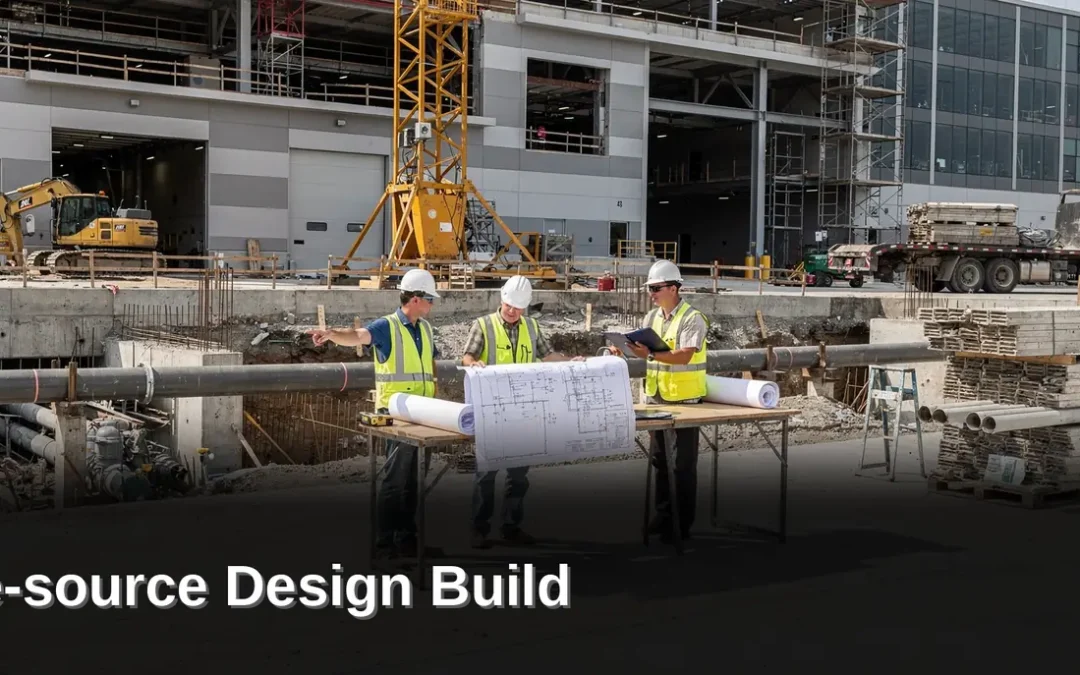
Multi-contractor projects hide costs in delays, change orders, and finger-pointing between separate design and construction teams. Evergreen Industrial’s single-source design/build model, backed by an internal Steel Erect division and in-house preconstruction, procurement, and general trades, unifies its expertise under one contract, eliminating handoff gaps that drain budgets and schedules.
Multi-contractor industrial projects hide costs in redesign fees, change orders, and schedule delays caused by disconnected design and construction teams. Single-source design-build, offered by Evergreen Industrial across Northern Colorado, unifies both disciplines under one contract, cutting miscommunication, accelerating delivery, and reducing financial risk before a facility ever generates revenue.
Key Points
Multi-contractor projects increase costs through coordination delays, rework, and communication breakdowns between separate teams.
Design-build delivery reduces financial risk by locking budgets early through integrated preconstruction services and estimating.
Single-source accountability eliminates finger-pointing on change orders, schedule delays, and quality issues that plague fragmented contracts.
Evergreen Industrial’s internal Steel Erect division and unified team structure compress timelines and prevent costly contractor conflicts.
What Are the Hidden Costs of Multi-Contractor Projects?
Unexpected costs surface on industrial builds even when project plans look airtight. Multiple contractors working under separate agreements create gaps where expenses hide. Those gaps widen as a project moves through design, construction, and handoff. Owners who track only the headline bid often miss the exposure building underneath it.
Delays account for much of this exposure. Late design changes, permitting holdups, or labor shortages stretch the schedule. Every extra week on site raises overhead costs across every trade involved. On a multi-contractor job, these delays compound because no single party controls the sequencing.
Why Does Splitting Design and Construction Contracts Raise Costs?
A traditional split-contract structure forces owners to manage two separate agreements, one with the designer and one with the contractor. This arrangement often creates a disconnect between what the design intends and what gets built in the field. Comparing design build vs design bid build models shows that split responsibility tends to generate more rework. More disputes over who bears the cost.
What Happens After the Building Is Handed Off?
Cost exposure doesn’t end at substantial completion. Facilities maintenance gaps often surface when no single firm holds responsibility for the building’s full lifecycle. Common exposure points include:
Delay-driven overhead from permitting or labor shortages
Miscommunication between design intent and field execution
Unclear ownership of post-handoff maintenance and repairs
Multi-contractor project costs accumulate precisely in these unmanaged handoffs between parties.
How Does Single-Source Design Build Cut Costs?
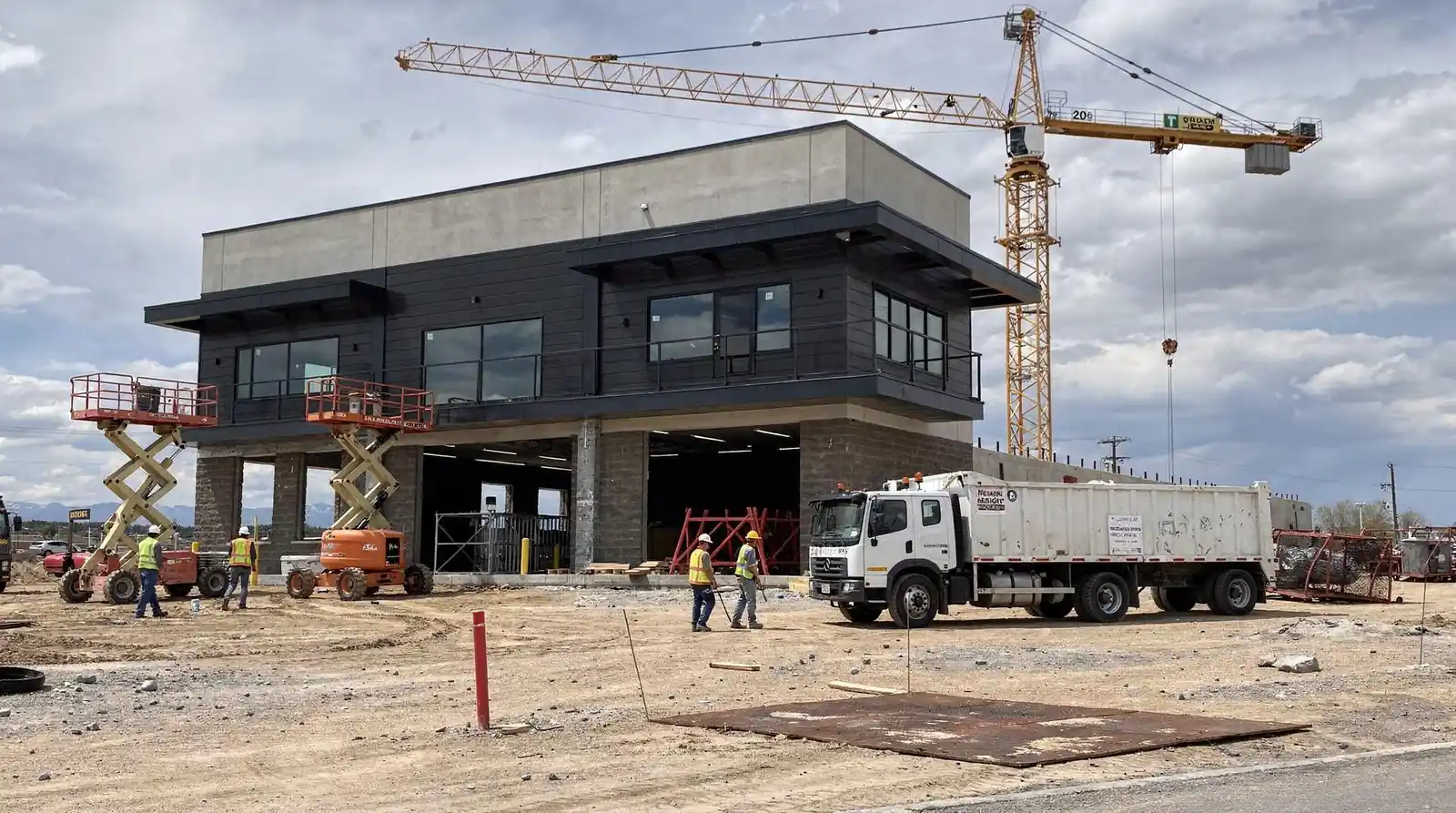
Single-source design build cuts costs by placing design, permitting, and construction under one contract instead of splitting them across competing firms. Evergreen Industrial specializes in single-source design build project delivery for industrial, commercial, and oil and gas clients across Colorado, structuring every phase so cost decisions get made by one accountable team rather than passed between separate parties.
That structure matters because separate design and construction teams create separate incentives. When designers and builders answer to different contracts, gaps open between what gets drawn and what gets built. Design-build closes that gap by bringing both disciplines together under one contract, creating a unified process that unlocks savings across the full project lifecycle rather than at a single phase.
What services does single-source delivery actually combine?
Evergreen Industrial’s preconstruction services cover design, permitting, and project budgeting so cost risks surface before they reach the field as change orders. Construction services then carry that same team through general contracting, pre-engineered metal building (PEMB) selection and procurement, structural steel erection, and general trades labor.
An internal Steel Erect division reinforces this model further. Structural steel scope stays inside the company instead of going out to a separately bid subcontractor, removing a common source of scheduling conflicts and markup layering.
The cost advantage shows up across several areas:
Unified accountability: one team owns design accuracy and field execution, cutting disputes over who pays for errors.
Fewer bid cycles: preconstruction budgeting replaces sequential rebidding between design and construction phases.
Controlled steel costs: in-house erection avoids third-party subcontractor markups on structural scope.
Earlier risk detection: budget and permitting review during preconstruction catches conflicts before they become costly field changes.
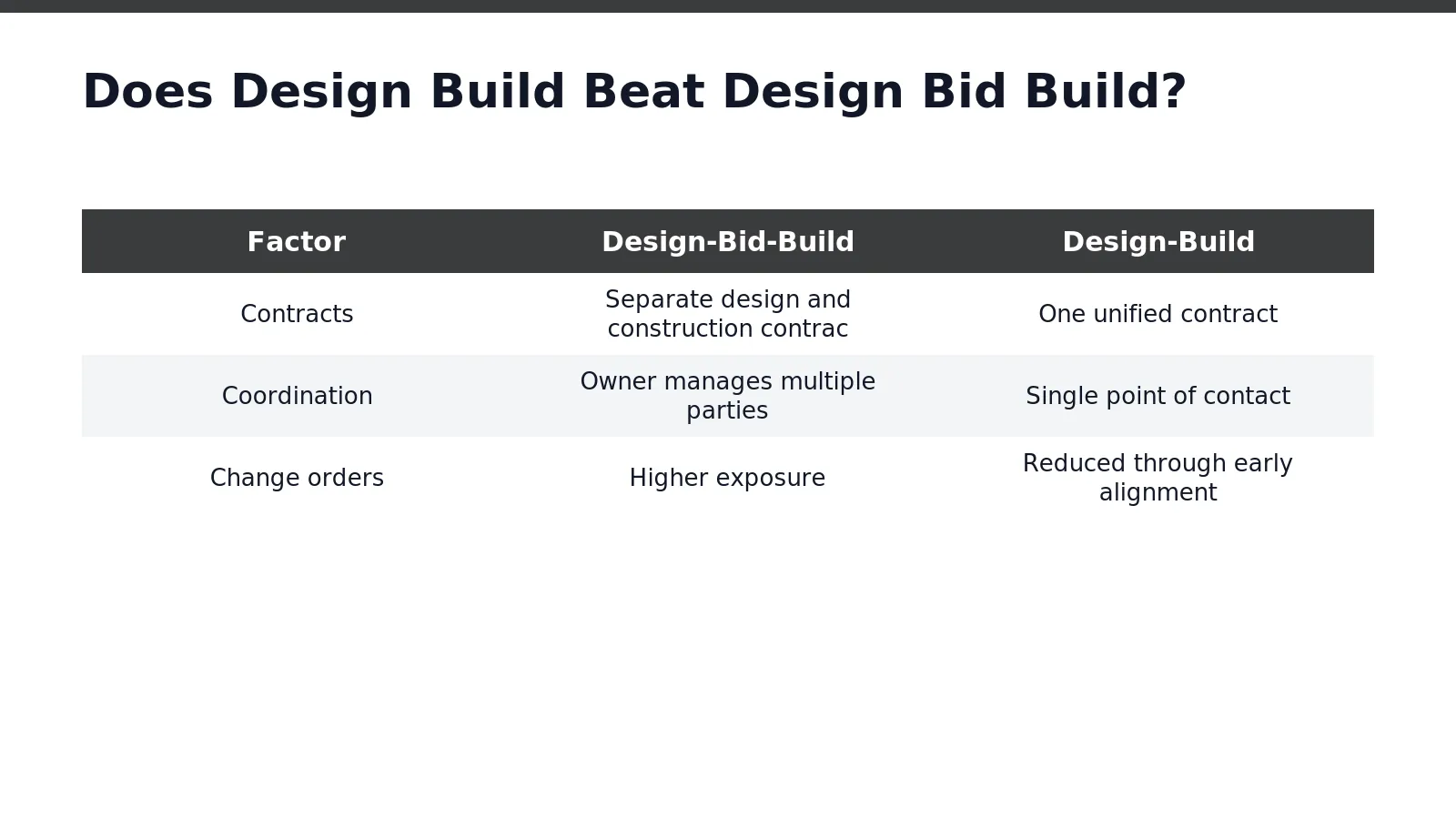
Does Design Build Beat Design Bid Build?
Federal research and industry practice both favor design-build for industrial owners comparing design build vs design bid build delivery. A federally commissioned study examined how design-build contracting affects project duration against traditional multi-contract delivery on public infrastructure work. Separately, industry practice shows top construction firms adopt design-build specifically to lower costs, streamline efficiency, and maintain quality control from concept through completion.
Why Do Multi-Contractor Projects Cost More?
Splitting design and construction invites multi-contractor project costs that traditional bidding rarely accounts for upfront. Disconnected teams generate more industrial construction change orders, since design gaps surface mid-build rather than during planning.
Does a Single Point of Contact Reduce Risk?
Yes. Single-source design build places one team accountable for design and construction. Evergreen Industrial, an industrial design build Colorado firm based in Johnstown, gives Northern Colorado clients that single contact, backed by integrity and disciplined communication throughout the build.
FAQs
What hidden costs come from multi-contractor projects?
Delays from permitting, design changes, or labor shortages raise overhead across every trade. Miscommunication between design intent and field execution drives rework and disputes over who pays for it.
Why does single-source design build reduce financial risk?
Evergreen Industrial locks budgets early through integrated preconstruction, procurement, and estimating, unifying design, permitting, and construction under one contract instead of splitting responsibility across competing firms.
Who stays accountable after the building is handed off?
Evergreen Industrial holds single-source accountability across the project lifecycle, eliminating the finger-pointing and unclear maintenance ownership that occur when separate design and construction firms handle handoff.
In Closing
In closing, the fragmented approach to industrial construction, splitting design, permitting, procurement, and execution across multiple contractors, introduces coordination failures, schedule delays, and cost overruns that compound throughout project delivery. A unified design/build model eliminates these hidden expenses by consolidating accountability, streamlining decision-making, and leveraging integrated teams from preconstruction through completion. When a single entity manages design, permitting, budgeting, and construction under one roof, cost predictability improves and project efficiency becomes measurable. This integrated approach represents not merely a procurement preference but a fundamental operational advantage for industrial clients seeking reliable outcomes.
Recent Comments